

College Bros Local Yard Guides
October Lawn Care in Louisiana: What to Do (and What to Skip)
October lawn care in Monroe and West Monroe is about helping your yard slow down without setting it back. St. Augustine, centipede, Bermuda, and zoysia are warm-season grasses. They still need attention in fall, but they do not need the same push you give them during summer. Here is what to keep doing and what to leave alone.
Keep mowing regularly, just less often
Keep mowing while the grass is growing. As growth slows, stretch the time between cuts instead of dropping the mower lower. Keep the normal mowing height for your grass and variety; St. Augustine generally stays taller than centipede or Bermuda. Do not scalp the lawn to get it ready for winter.
Take off no more than one-third of the blade in a single cut, and keep mower blades sharp. A clean cut is easier on the grass than a torn, ragged tip. Watch the yard, not just the calendar: a warm stretch may mean another mow before you expected it.
Do not apply high-nitrogen fertilizer in fall
Skip the high-nitrogen fertilizer on your warm-season lawn this fall. It pushes tender, weak growth when the grass should be slowing down. That new growth is more vulnerable to brown patch and cold damage, including winter kill.
A bag labeled “winterizer” is not automatically right for a Louisiana lawn. Read the label, and use a soil test to guide any other nutrient needs. Do not chase summer-green St. Augustine, centipede, Bermuda, or zoysia with nitrogen in October.
Do not aerate or dethatch in fall; wait for spring
Save aeration and dethatching for late spring, after the lawn has greened up and is actively growing. Both jobs disturb the turf, and slowing fall growth gives it less opportunity to recover before cold weather.
If the ground feels compacted or thatch seems heavy, make a note of it now and assess it when growth returns. These are jobs to do when needed, not automatic additions to an October cleanup.
Watch for expanding brown patches, especially in St. Augustine
Brown patch, also called large patch in warm-season lawns, can show up as circular or irregular yellow-to-brown areas that grow outward. Be especially watchful with St. Augustine. An expanding patch may have a yellowish edge while the center looks brown.
Cool, wet conditions favor this disease. Avoid unnecessary irrigation; when watering is needed, do it early enough for the leaves to dry. Do not throw fertilizer at a brown patch to try to green it up. Other problems can look similar, so get the cause identified before choosing a treatment.
Want winter green? Plan perennial ryegrass for late October through mid-November
For a green lawn through winter, overseed with perennial ryegrass from late October through mid-November, once warm-season growth has slowed. Treat that as a planning window for Monroe and West Monroe; local weather and the condition of your lawn still matter.
Ryegrass provides temporary winter color while the permanent lawn is dormant. It also adds mowing and watering, and it needs a managed spring transition so it does not compete with the returning warm-season grass. Letting a healthy lawn go dormant is a reasonable choice, too.
If you want overseeding, decide before applying a fall preemergent weed preventer. Those products can also stop ryegrass seed from establishing. Check the product's reseeding interval and have your grass type and lawn condition assessed before seeding.
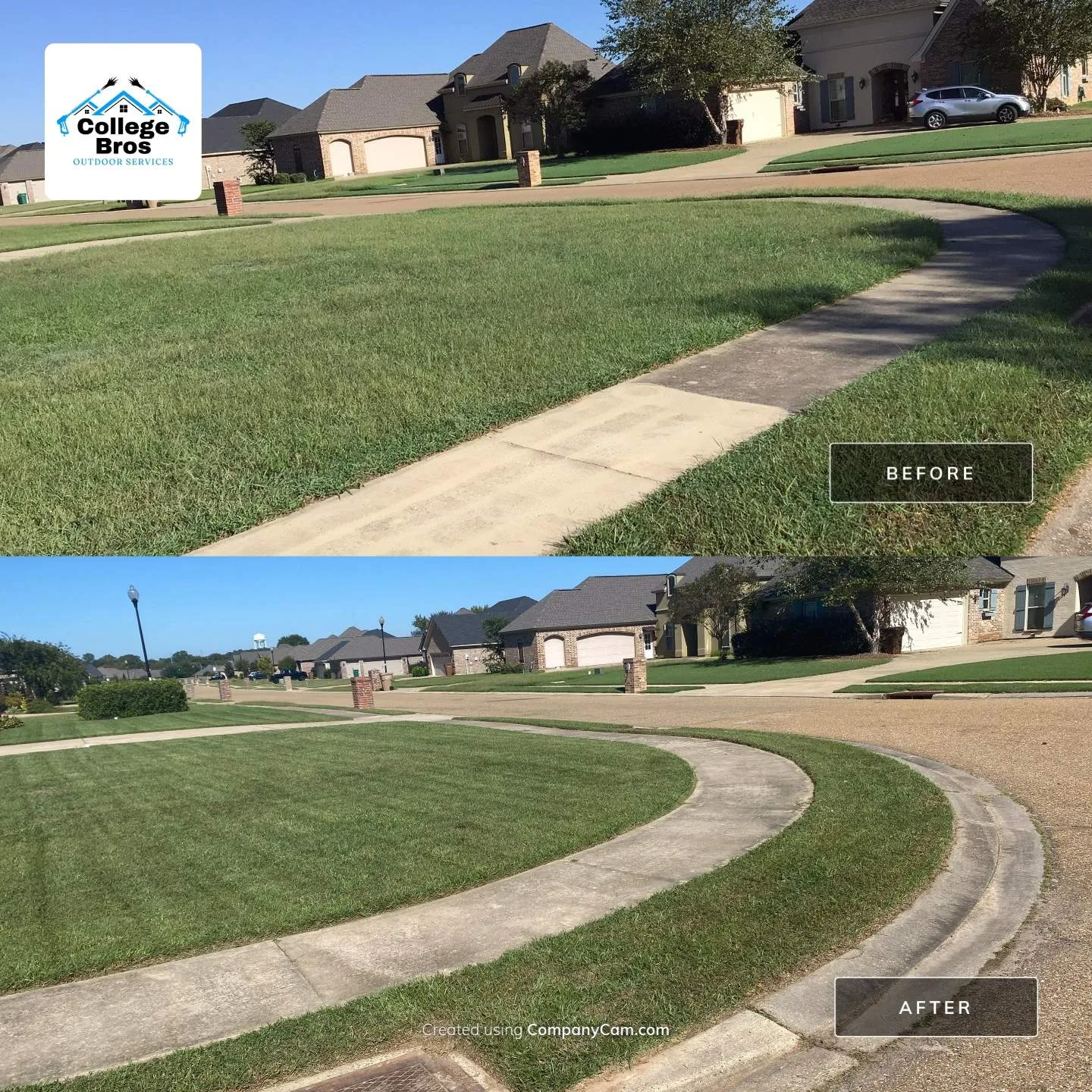
Need fall mowing or overseeding in Monroe or West Monroe?
College Bros handles fall mowing and overseeding. Tell us about your lawn and whether you want winter color, and we will help you plan the work. Request a quote below or give us a call.