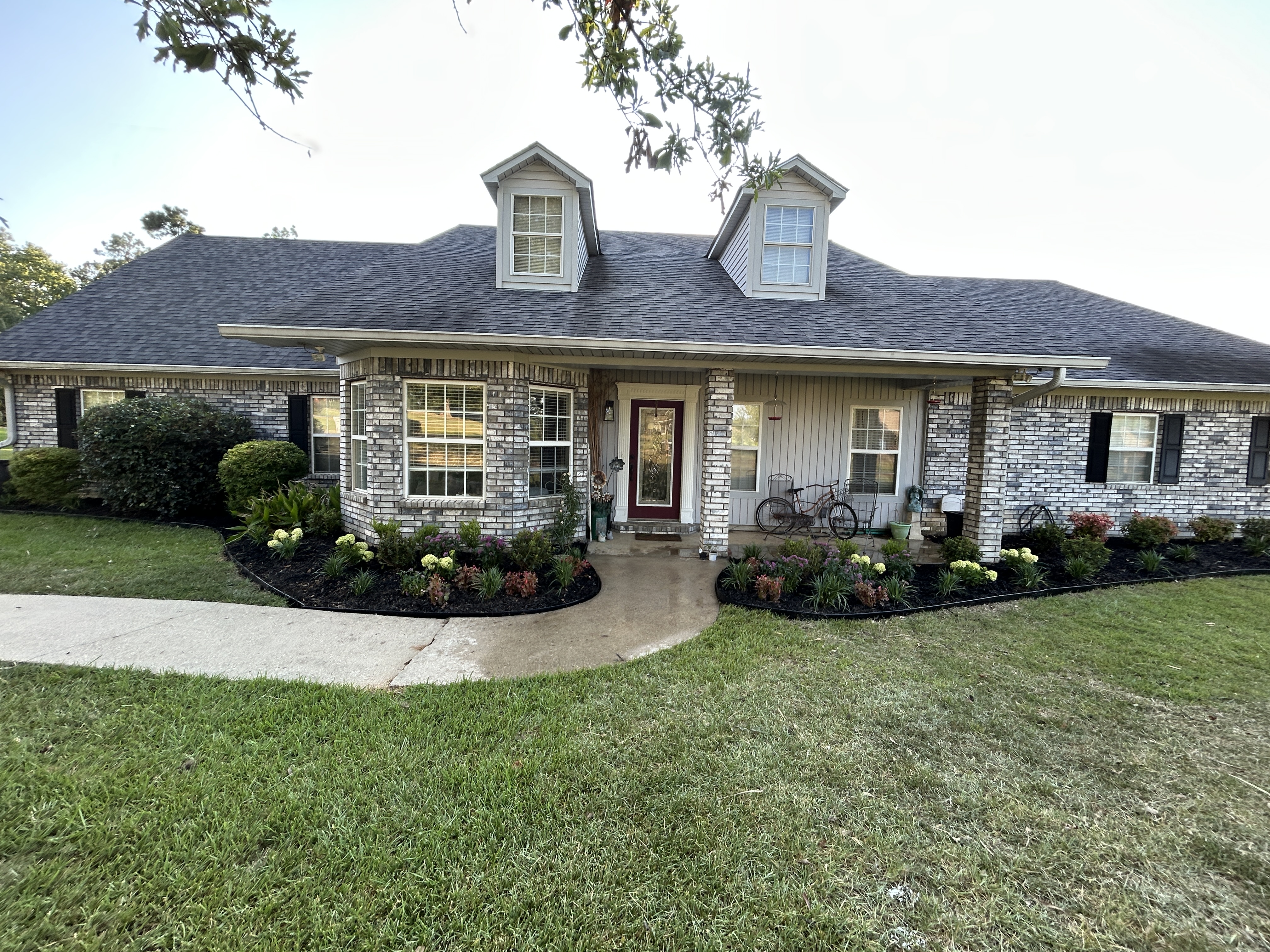
What a bed refresh actually changes
A refresh is a focused cleanup and presentation reset, not a promise to rebuild every part of a property. In this completed College Bros front-bed project, the documented scope was clean edging, black mulch, and new plantings. That combination can make the bed line visible again and give the existing front elevation a more intentional first impression without claiming that every home needs a full redesign.
For Monroe and Northeast Louisiana homeowners, a bed can look tired quickly when summer growth, rainfall, and routine debris blur the edge and expose bare soil. LSU AgCenter’s Louisiana guidance notes that mulch is part of landscape-bed maintenance and should be applied correctly rather than piled against plant stems or trunks. The right amount and material depend on the plants and the actual site; a photo cannot diagnose soil, drainage, or plant health.
Use this three-path decision check
- Choose a refresh when the layout still works but the bed needs weed cleanup, visible edges, refreshed mulch, or selective plant replacement.
- Choose a redesign conversation when the bed’s shape, plant spacing, sun exposure, or walkway relationship no longer fits how you use the front of the home.
- Pause for a specialist assessment when water stands after rain, a tree appears unstable, utilities may be involved, or the project needs grade, retaining, irrigation, electrical, or structural work.
What to compare before asking for a quote
Start with the finish condition. Ask whether the scope includes bed cleanup, edging, plant removal or replacement, mulch, debris removal, and a final walk-through. A useful quote separates the work that is included from items that need an on-site look. That makes it easier to compare a small refresh with a larger design change without pretending they are the same service.
For the horticulture piece, LSU AgCenter recommends clearing unwanted material from the bed and using appropriate mulch depth as part of landscape-bed preparation. Use that as a homeowner maintenance reference, not as a substitute for a site-specific planting or drainage plan. You can also review College Bros’ landscaping service, real project gallery, and published pricing context before deciding what to request.
What I would tell a Monroe homeowner
Do not start by asking for “more mulch.” Start by looking at the line of the bed and the condition you want when the work is done. If the shape still feels right, a focused cleanup, edging, and selective refresh can go a long way. If water is sitting there or the plants have outgrown the space, say that up front so we can talk about the real problem instead of covering it up.
Honest limits
College Bros can document the visible scope of a bed refresh, but a photo-based conversation cannot confirm drainage performance, underground utilities, plant disease, structural root issues, or a tree hazard. Those conditions may require a qualified drainage, irrigation, arborist, utility, or other specialist assessment before cosmetic work begins.
Next step
Send wide photos of the whole bed, plus closeups of the areas that concern you most. Tell us whether you are looking for a refresh or whether something underneath the appearance needs attention first.
Start a landscape-bed conversation
Share the condition you see and the finish you want. We will start with the visible scope and flag when an on-site or specialist assessment makes more sense.
Request a quoteSources and proof
First-party proof: approved College Bros completed front-bed refresh media, with location metadata removed and customer identity withheld. External guidance: LSU AgCenter, Best Practices for Landscape Bed Preparation. This guide does not diagnose drainage, plant disease, utilities, or structural conditions from a photo.